
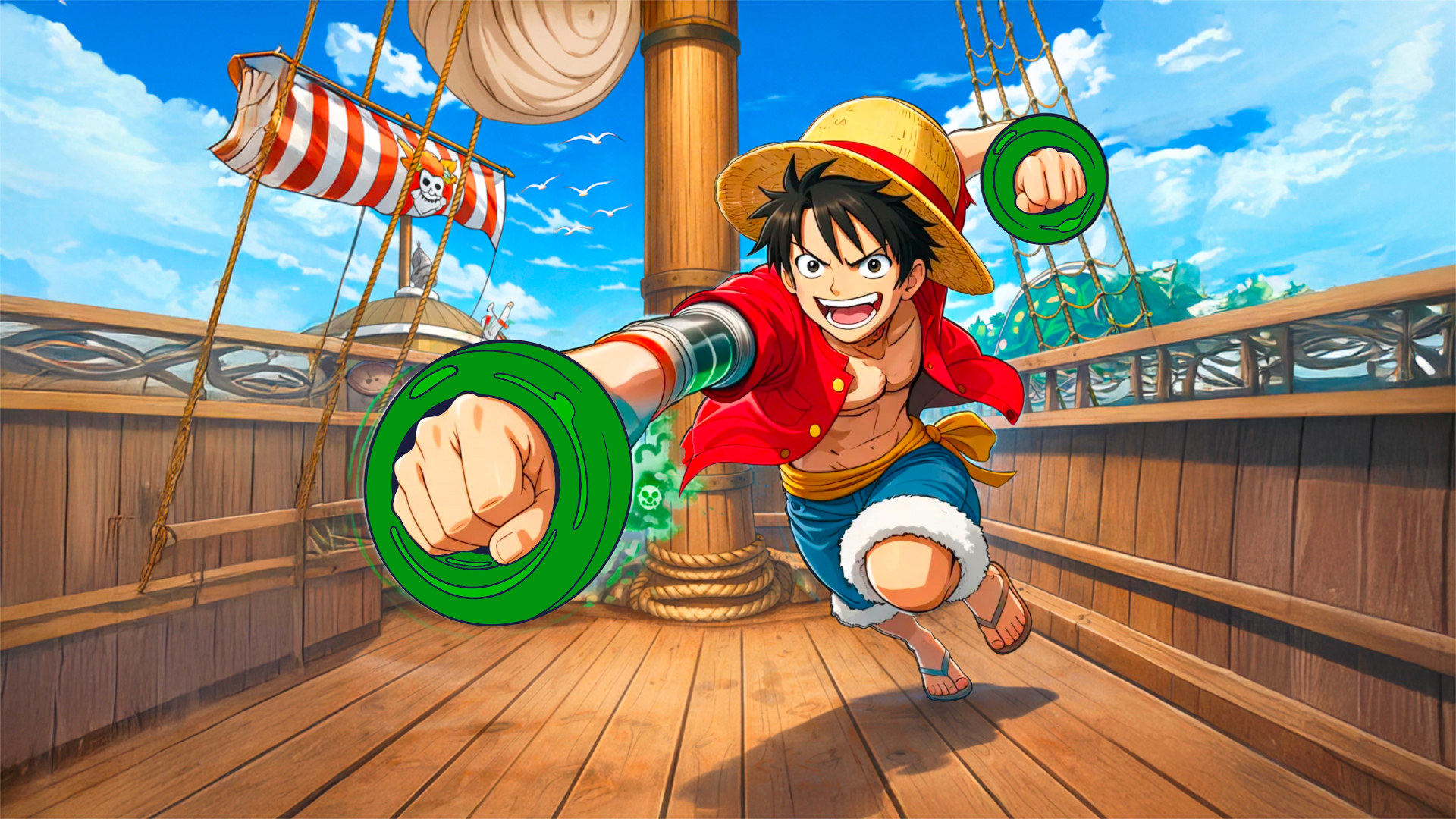
Fans of One Piece know that Luffy’s body can stretch, compress, and absorb impact far beyond the limits of any natural material. From dodging cannonballs to surviving massive impacts and even poison, his “rubber body” is unmatched. But how would we translate Luffy’s powers into real-world high-performance elastomers?
From an engineering perspective, the “perfect Luffy elastomer” would likely be a hybrid profile combining:
EPDM for elasticity and resilience,
VMQ for thermal and mechanical endurance,
FKM for chemical resistance—yes, the kind that helps him survive Ceasar Clown’s deadly chemical weapons on Punk Hazard.
EPDM is remarkably close to Luffy’s “elastic superpowers”:
Elasticity and rebound resilience: Remember when Luffy stretches his arms to punch Bellamy or even when he bounces back after being compressed by giants? EPDM’s outstanding elongation and recovery mimic this behavior.
Heat, UV, and weather resistance: From the desert of Alabasta to the snowy peaks of Drum Island, Luffy faces extreme climates—just like EPDM resists environmental stress.
Compression set performance: After being flattened or stretched (think Impel Down or Marineford battles), Luffy always returns to his original shape.
Vibration damping: Essential for absorbing repeated blows from Pacifista laser beams or Kaido’s attacks.
For Luffy’s extreme forms—Gear Second, Gear Third, Gear Fourth, even bouncing off water surfaces—silicone provides additional traits EPDM cannot:
Thermal stability: Gear Second heats Luffy’s blood to increase speed; VMQ remains stable even at high temperatures (–60°C to +200°C).
Flexibility at low temperatures: Essential for icy islands like Punk Hazard’s frozen zones.
Tear and fatigue resistance: With repeated stretching in combat, Luffy’s “rubber body” needs durability—VMQ delivers that.
Chemical inertness: Like in Dressrosa, where he fights in harsh environments, the material remains unaffected.
Now, the real test: Ceasar Clown’s chemical weapons on Punk Hazard. FKM is one of the few elastomers with superior resistance to acids, corrosive gases, and toxic compounds—exactly the type of agents Luffy faces in episodes 579–582:
Surviving Shinokuni poison gas
Withstanding deadly chemical traps in Ceasar’s lab
Enduring hot, toxic, or corrosive environments, which would destroy ordinary rubber
In other words, if Luffy can survive Ceasar’s chemical experiments, the real-world parallel would be FKM: tough, chemically resistant, and able to retain shape and function under attack.
In the real world, Luffy would embody the ultimate engineered elastomer:
flexible without failure, resistant to deformation, and impervious to even the deadliest chemical threats.
If your application needs “superhuman” elasticity, endurance, or chemical resistance… our team is ready to help you find the right compound.
